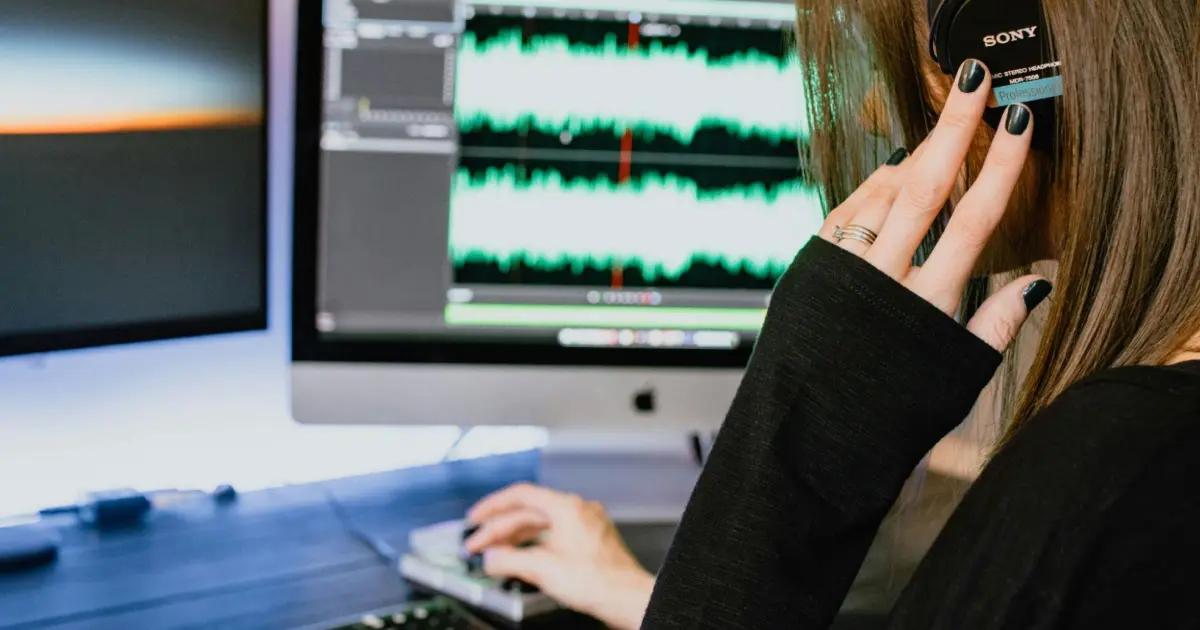


If your product depends on video or audio in any way, a streaming platform, a video conferencing tool, an in-app calling feature, a voice AI agent, quality problems are not a cosmetic issue. They are a churn mechanism.
A recent industry study on streaming user experience found that a poor streaming experience is the sole reason 36% of viewers, and 43% of viewers under 25, have cancelled a subscription. On the collaboration side, Owl Labs research on video conferencing found that 62% of employees run into technical difficulties during video calls, and a separate look at enterprise video conferencing trends put the figure for professionals citing technical or software problems as their biggest meeting complaint at 58%. Whatever your product category, the pattern holds: people forgive a lot of things, but they do not forgive video that stutters or audio that cuts out.
That is exactly why choosing a testing partner for A/V quality is a different decision than choosing a general QA vendor. A/V quality problems behave differently from typical software bugs. They are perceptual, time-sensitive, and often invisible in a lab environment that does not replicate real network conditions. A closer look at the top challenges in audio and video app testing covers why polished, production-grade A/V is harder to get right than it looks from the outside.
This is the context a testing partner needs to understand before you even get to the technical questions. If they are treating A/V testing as an extension of generic functional QA, that is a signal worth noting early. Here are nine questions worth asking before you sign.
TL;DR
30-second summary
Choosing an A/V quality testing partner comes down to a handful of concrete questions, not a gut feeling about the vendor.
- Coverage matters more than a demo. Ask what codecs, resolutions, and sync scenarios they actually test, not just whether the app opens.
- Real devices beat emulators. Confirm testing happens on real hardware under real, degraded network conditions.
- Metrics beat vibes. A credible partner measures against defined thresholds, not "it sounded fine to us."
- Device coverage needs upkeep. A device matrix goes stale fast; ask how often it's refreshed.
- Reporting should be actionable. A quality score with no context doesn't help your engineers fix anything.
- Live and on-demand are different problems. Make sure a vendor can speak to both if your product has a live component.
- Specialization is not a given. Ask whether A/V testing is a core discipline for them or a generalist team stretched onto it.
- Testing should be continuous. A one-time audit won't catch the quality regression your next release quietly introduces.
1. What audio and video-specific test coverage do they actually run?
Ask for specifics. This means things like codec and resolution matrices, bitrate ladder testing, audio-video sync verification, not just "does the video play." A vendor with real depth here should be comfortable talking through things like how H.264 output compares across resolutions and bitrates, since encoding decisions have a direct, measurable effect on perceived quality. That level of granularity is a reasonable bar for what to expect from a partner who tests this seriously.
Sync testing deserves its own line of questioning too. Audio drifting out of alignment with video is one of the most immediately noticeable quality failures for end users, and testing it properly requires dedicated methodology, not a visual spot check.
2. Do they test on real devices and real networks, or mostly emulators?
Emulator-only testing catches a fraction of the issues that show up in the field. Camera behavior, hardware decoding, thermal throttling on longer calls, and real network variability all require physical devices and live conditions to surface.
Network condition testing matters just as much. A vendor should be able to describe how they simulate degraded connections, and skip the usual "it worked on our office Wi-Fi" reasoning. That kind of environment manipulation is what separates surface-level testing from something that will actually catch problems before your users do.
3. What metrics do they actually measure quality against?

This is where a lot of vendors get vague. Good audio and video testing partners work from a defined set of metrics, not gut feel. Ask exactly what they measure, on the audio side that might mean things like clarity, noise, and distortion scoring, and on the video side, resolution fidelity, artifacting, and frame stability, all benchmarked against clear thresholds rather than a subjective pass or fail.
Custom-built measurement tooling is a good signal of maturity here. TestDevLab's own tools, AQTDL for audio and VQTDL for video, are built specifically to score quality against defined benchmarks rather than relying on ad hoc review. Your audio and video quality testing partner should be able to speak to exactly what they measure and why.
4. What's their device and OS coverage, and is it kept current?
Fragmentation is one of the quieter risks in audio and video testing. A partner might have excellent methodology but a device matrix that is a year out of date, missing new chipsets, camera modules, or OS-level media handling changes. Ask how coverage is maintained and how often the device list is refreshed.
Cross-platform consistency is its own can of worms too, since the same stream or call can behave differently across iOS, Android, web, and desktop clients.
TestDevLab maintains a device lab of over 5,000 real devices, regularly refreshed to keep pace with new chipsets, camera hardware, and OS releases. Get in touch with one of our audio and video quality testing engineers to learn more about the devices and hardware we have at our disposal.
5. Can they simulate real-world network degradation?
Packet loss, jitter, and bandwidth throttling are the conditions your product will actually face in the field, not the clean connection a demo runs on. This is especially relevant for anything built on VoIP or real-time transport protocols. A capable partner should be able to walk you through how they test under these conditions, well beyond a simple "it connected" pass or fail.
6. What does their reporting actually give your engineering team?
A quality score with no context is close to useless. Ask to see a sample report. Good reporting should give your engineers something they can act on: where in the pipeline a degradation occurred, under what conditions, and how it compares to a baseline or competitor benchmark. Vendors who have invested in purpose-built tooling for this, rather than repurposed generic QA reporting, tend to produce noticeably more usable output.
Want to see how TestDevLab approaches scoring? Request a sample report and see the level of detail for yourself.
7. How do they handle live and real-time testing versus on-demand content?
These are genuinely different testing problems. On-demand content can be tested against a fixed asset. Live and real-time content requires testing in motion, often across multiple simultaneous participants or streams, and it fails differently, with higher start-failure rates and a much lower tolerance for buffering or delay. If your product includes any live component, ask specifically how a vendor handles this on the content-delivery side, not just in a generic functional test plan.
8. Do they have engineers who specialize in audio and video testing, or generalist QA staff applied to an A/V problem?
This question is worth asking directly, because the answer is not always obvious from a sales conversation. Specialized A/V testers bring domain knowledge, familiarity with codecs, perceptual quality standards, and common failure patterns that generalist QA engineers typically do not have. Ask about certification (ISTQB is a common baseline), but also ask how much of their day-to-day work is specifically A/V versus spread across unrelated testing categories.
The breadth of a vendor's published work is often a reasonable proxy here. Partners who treat conferencing and streaming A/V as distinct disciplines, rather than one generic bucket, tend to have the specialization to back it up.
9. How do they scale with you, a one-off audit or continuous regression testing?
A single quality audit tells you where you stand today. It says nothing about whether the next release, the next codec change, the next third-party SDK update, breaks something quietly. Ask whether the vendor supports continuous regression testing integrated into your release cycle. Algorithm and encoding changes made for unrelated reasons, compression tweaks, new AI-driven features, can degrade audio or video quality without anyone noticing until users complain. How algorithm changes can quietly degrade audio quality is a good illustration of exactly this risk, and why one-off testing leaves a real gap.
A quick checklist for the vendor call
Bring these into any evaluation conversation:
- Can they show a sample report, not just describe one?
- Do they test on real devices under real network conditions, with specifics on both?
- Do they reference standardized quality methodology (MUSHRA, MOS, or similar) rather than informal review?
- Is their device and OS coverage documented and current?
- Can they speak to live/real-time testing separately from on-demand, if relevant to your product?
- Do they offer continuous regression testing, not just a one-time engagement?
- Are their engineers A/V-specialized, with certification and a track record in this specific discipline?
Getting this right before you sign
The cost of choosing the wrong A/V testing partner rarely shows up on the invoice. It shows up later, in churn numbers, in support tickets about choppy calls or garbled audio, in the slow erosion of trust that happens when a product that depends on video or audio simply does not sound or look right. Asking these nine questions upfront is a small amount of friction compared to finding out the hard way, after launch, that your testing coverage had gaps nobody flagged.
TestDevLab specializes in this exact discipline, combining human-driven, AI-augmented testing with real devices, real network conditions, and engineers who focus specifically on audio and video quality rather than treating it as a subset of general QA. If you are evaluating partners for A/V testing, it is worth a conversation.
FAQ
Most common questions
What is audio and video quality testing?
Audio and video quality testing evaluates how video and audio actually perform for end users, covering things like resolution and bitrate handling, audio-video sync, network resilience, and perceptual quality under real-world conditions. It goes beyond functional QA, which typically checks whether a feature works, to assess whether it works well enough that users do not notice or complain.
Why can't general QA teams handle A/V testing?
General QA testing is built around functional pass/fail criteria: does the button work, does the form submit. A/V quality is perceptual and conditional, the same stream can look fine on a strong connection and fall apart on a throttled one, and a sync issue of a few hundred milliseconds might be invisible to one tester and obvious to another. This requires specialized methodology and engineers trained specifically in codec behavior and network simulation, which is not typically part of a generalist QA skill set.
How often should A/V quality testing happen?
Ideally, continuously rather than as a single audit. Encoding changes, third-party SDK updates, and even unrelated feature releases can degrade audio or video quality without an obvious connection to the change that caused it. Regression testing integrated into your release cycle catches these issues before they reach users, rather than after support tickets start coming in.
What's the difference between testing live and on-demand content?
On-demand content can be tested against a fixed, repeatable asset. Live and real-time content has to be tested in motion, often across multiple simultaneous participants or streams, and it fails differently, with higher rates of start failures and a much lower tolerance for buffering or delay. A vendor's approach to one does not automatically transfer to the other, so it is worth asking about both separately if your product includes any live functionality.
What should I ask to see before signing with an A/V testing vendor?
A sample report. Good reporting shows where a degradation occurred, under what conditions, and how it compares to a baseline, not just a pass/fail score with no context.
Not sure your current testing covers what actually matters?
Get a free audio-video quality assessment and see where the gaps are before your users find them.