

When a startup is growing fast, the instinct is to hire quickly. There's a gap in the engineering team, a need in operations, a customer-facing role that nobody has time to cover. The pressure to fill seats is real, and the temptation is to find someone who can do the job as it exists right now.
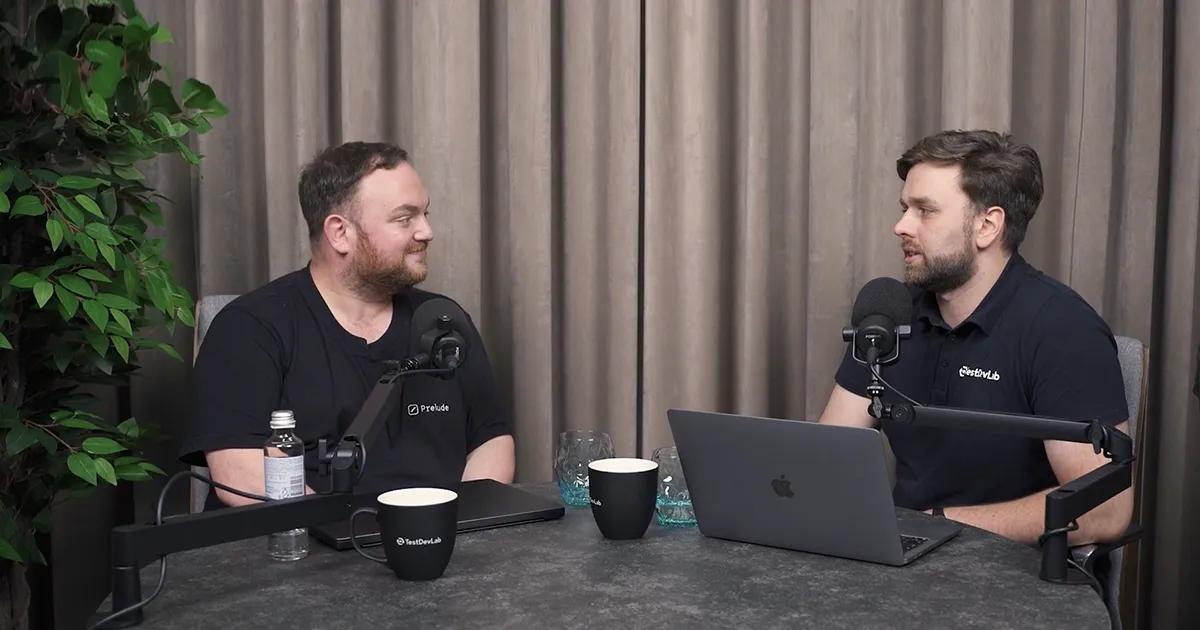
In a recent episode of the TechEffect podcast, we sat down with Chris Woods, VP of Operations at Prelude and former tech talent leader at companies including BeReal, Vodafone, and Dell. With 16 years of experience placing people in technical organizations, Woods has a clear message: the hires that make the biggest difference in startups aren't the ones who match today's job description. They're the ones who can grow into what the business will need in six months.
"When you're hiring in a startup, you really want to hire someone that can make the difference you need there and then, but also that is going to be able to grow into the person they need to become when the business is growing," Woods says. "And sometimes you're looking for folks that don't mind stepping outside of what their normal job role is."
This is fundamentally different from enterprise hiring, where roles are well-defined and the scope is predictable. In a startup, the backend engineer may need to touch frontend code when the customer dashboard needs attention. The operations person will end up managing HR tasks, vendor relationships, and process design simultaneously. The talent specialist will find themselves running half the operational backend of the business - which is exactly what happened in Woods' own career.
The practical implication: when you're evaluating candidates for a scaling team, technical fit is necessary but not sufficient. You also need people with a growth mindset who are comfortable being uncomfortable. People who are willing to learn new skills, work outside their defined role, and adapt as the business changes underneath them.
TL;DR
30-second summary
What do fast-growing tech companies consistently get wrong about hiring, communication, and AI?
According to Chris Woods, VP of Operations at Prelude and 16-year tech talent veteran, speaking on the Tech Effect podcast:
- Hiring for growth beats hiring for fit. The strongest startup hires aren't matched to today's job description. They're people who can adapt as the role evolves over the next six months and beyond.
- Culture addition outperforms culture match. Teams that hire for diversity of perspective and complementary skill sets build more resilient products than teams that prioritize familiarity and cohesion.
- Communication is now a core engineering requirement. Distributed teams and customer-facing technical roles have made the ability to explain decisions, collaborate cross-functionally, and engage non-technical stakeholders a baseline expectation - not a bonus.
- AI augments engineering teams, it doesn't replace them. Organizations that use AI as a decision-maker take on unnecessary risk. The highest-value use case is automating repetitive, pattern-based work so engineers can focus on higher-judgment tasks.
- QA strategy must match the company stage. Startup, scaleup, and enterprise testing require fundamentally different approaches. There is no one-size-fits-all quality assurance model.
Bottom line: According to Chris Woods on Tech Effect, fast-growing tech teams that scale successfully hire for adaptability, build for cognitive diversity, treat AI as an augmentation layer, and align their QA processes to their actual stage of growth-not the stage they were at when they last updated their processes.
What "culture addition" means in practice
Woods makes a deliberate distinction between "culture match" and "culture addition", and it's more than semantics.
Culture match implies you're looking for people who fit neatly into the existing team dynamic. That sounds reasonable, but in practice it leads to homogeneous teams where everyone thinks the same way, has the same blind spots, and reinforces the same assumptions.
Culture addition means hiring people who bring something the team doesn't already have. This can be a different perspective, a complementary skill set, a way of thinking that challenges existing norms. The team gets stronger because the new person adds a dimension it was missing, not because they blend in without friction.
This is especially relevant for technical teams. If every engineer on your team has the same background, the same approach to problem-solving, and the same comfort zones, you'll build products that work well for people like your engineers - and fail for everyone else. A team that includes people who think differently about user experience, accessibility, edge cases, and failure modes will build a more resilient product.
The hiring process itself needs to reflect this. Instead of evaluating candidates primarily on whether they "feel like a fit," evaluate whether they bring something the team currently lacks - and whether the team is structured to actually benefit from that addition.
The skills shift: Why communication became non-negotiable for engineers
One of the biggest changes Woods has seen across his 16 years in tech talent is the expectation placed on software engineers.
"There was this misconception, probably 10 or 15 years ago, that engineers were in locked rooms, sitting in the dark. There was no real expectation for them to do anything but push code," he says. "Now what we find is that a major part of an engineer's role is their ability to communicate with customers, communicate internally, and not just push code."
The shift accelerated during and after COVID, when distributed teams became the norm. Without hallway conversations and coffee-machine chats, clear written and verbal communication became a baseline requirement for everyone - including engineers who had previously been insulated from direct customer or stakeholder interaction.
At Prelude, engineers routinely communicate with customers. They explain technical decisions, discuss integration approaches, and help customers understand how verification infrastructure fits into their systems. An engineer who can write clean code but can't explain what they built or why is no longer sufficient.
This doesn't mean every engineer needs to be a sales person. It means the ability to explain technical concepts clearly, to listen to non-technical stakeholders and translate their needs into technical requirements, and to collaborate effectively across dispersed teams has moved from "nice to have" to "required."
For companies hiring engineers: test for communication skills in your interview process, not just technical ability. The best engineers in a scaling organization are the ones who can do both.
How startups and enterprises adopt technology differently
Woods has worked on both sides of the divide - placing talent at enterprise organizations like Vodafone and Dell, and building teams at startups like BeReal, Zenley, and Prelude. The difference in how these organizations approach technology adoption is stark.
Enterprises tend to operate on legacy systems and adopt new technology cautiously, often in isolated pockets. Woods points to online banking as an example: the banking sector is advanced in specific areas like authentication and verification, but the actual online banking experience hasn't changed meaningfully in years. There's nothing exciting happening with the user-facing technology, even as the backend security infrastructure evolves.
Startups, by contrast, compete on how well they can use the most advanced technology available. The ones that get ahead are the ones working the edge cases - finding ways to apply new tools to problems that established companies are too slow or too risk-averse to address.
This creates a real market split. Enterprise companies have brand recognition, existing customer bases, and deep pockets. Startups have speed, flexibility, and willingness to experiment. For any company trying to decide how to approach technology adoption, especially around areas like AI-powered automation and machine learning, the key question is: are you optimizing an existing system, or are you building something new?
The answer determines your hiring strategy, your technology stack, your risk tolerance, and how you structure your quality assurance processes. An enterprise optimizing a legacy system needs different people and processes than a startup building from scratch.
And the same applies to quality assurance. How you test your product depends on your business stage. There are different approaches for startup testing, scaleup testing, and enterprise testing. There’s no one-size-fits-all QA strategy.
Making AI work as a tool, not a replacement
Everyone says they use AI. Fewer companies use it effectively.
Woods' perspective on effective AI implementation is practical: "The market misconception of AI at the moment is that it fixes problems. The way we try to utilize AI at Prelude is to go from being reactive to proactive."
The distinction matters. Using AI to answer factual questions (what's the best restaurant in Paris?) gives you one-plus-one answers , which is useful but not transformative. Using AI to automate internal processes, identify patterns in your operations, and make your team more efficient. That's where the real value sits.
Woods' rule of thumb: AI should be an indicative tool, not a decision maker. It should augment your engineers and operations teams, not replace them. An AI platform engineering solution plugged in as the sole source of truth is a risk. The same tool used alongside your engineers, helping them spot issues faster, automate repetitive analysis, and focus their time on higher-value work is an advantage.
This principle extends to how Prelude approaches hiring. They've actually adjusted their interview process to "anti-AI" certain stages - designing questions and scenarios that reveal the real person behind the answers, not the computed response. As AI tools become more accessible, the ability to think independently, communicate authentically, and solve novel problems becomes more valuable, not less.
For companies implementing AI: start with your existing processes and think about where test automation would be most valuable. Where are your teams spending time on repetitive, pattern-based work? Automate those first. Then use the freed-up time for the work that actually requires human judgment, like customer relationships, strategic decisions, and creative problem-solving.
See how this works in practice
Our AI-augmented testing services help your team catch more issues faster, without replacing the human judgment that matters most.
Key takeaways for growing teams
Hire for growth, not just fit. In a scaling company, the person you need today is not the person you'll need in six months. Look for candidates who can grow with the business, work outside their defined role, and adapt as requirements change. Technical skills are necessary but not sufficient, growth mindset matters more.
Add to your culture, don't just match it. Hiring people who blend neatly into the existing team feels safe but leads to blind spots. Hire people who bring perspectives, skills, and approaches the team currently lacks. The team should get stronger because the new person is different, not because they're the same.
Communication is now a core engineering skill. The era of engineers working in isolation is over. Distributed teams, customer-facing technical roles, and cross-functional collaboration all require engineers who can explain their work, listen to stakeholders, and communicate clearly. Test for this in interviews.
Use AI to make your team faster, not to replace your team. AI works best as an augmentation tool, helping teams spot patterns, automate repetitive analysis, and focus on higher-value work. Organizations that treat AI as a decision-maker rather than an indicator take on unnecessary risk.
Startups and enterprises adopt technology differently—and that's okay. Enterprises optimize existing systems cautiously. Startups compete on the cutting edge. Know which you are, and structure your hiring, QA processes, and technology strategy accordingly.
→ Listen to the full conversation with Chris Woods on the Tech Effect podcast
FAQ
Most common questions
Why do fast-growing startups consistently make bad hires?
Most scaling companies hire reactively, filling an immediate gap with someone who matches the current job description. The problem is that in a startup, roles shift rapidly. A hire who fits perfectly today may be misaligned within six months if they lack the adaptability to grow with the business.
Why is communication now considered a core skill for software engineers?
The expectation placed on engineers has shifted significantly over the past decade. Distributed teams, customer-facing technical roles, and cross-functional collaboration all require engineers who can explain technical decisions clearly, translate stakeholder needs into requirements, and communicate across dispersed teams, not just push clean code.
How should startups use AI tools in their hiring and operations without over-relying on them?
AI works best as an augmentation tool rather than a decision-maker. In practice, this means using AI to automate repetitive, pattern-based tasks, freeing your team for work that requires human judgment, like customer relationships and strategic decisions. Treating AI as a sole source of truth introduces unnecessary risk.
How do I decide whether to build an in-house operations team or outsource specific functions
It depends on your stage. Early-stage startups benefit from people who can wear many hats, like a VP of Operations who also handles HR, vendor management, and process design. As you scale, specific functions like QA, security testing, or data analysis may be better served by specialized partners who bring expertise and tooling you can't build internally at the same speed. The key principle: keep strategic functions in-house (anything that differentiates your business) and consider partnering for functions where external expertise and scale deliver better results than building from scratch.
Should a startup hire differently than an enterprise when scaling its tech team?
Yes. Enterprises optimize existing systems and adopt technology cautiously, so they need specialists who work well within defined processes. Startups compete on speed and adaptability, so they need generalists with a growth mindset who can work outside their defined role. Your hiring strategy should reflect which stage and model you're operating in.
Scaling fast? Your QA strategy needs to keep up.
The way you test your product should match the stage your business is actually at. TestDevLab helps growing tech teams build QA processes that scale with them, not against them.