

The problem with every tool creative professionals already have
There is a version of the remote collaboration story that most people have accepted as complete. Video calling got good enough. Screen sharing works. Files can be sent instantly. Surely the problem of working together at a distance has been solved.
For most knowledge workers, it has. For musicians, it has not even been properly attempted.
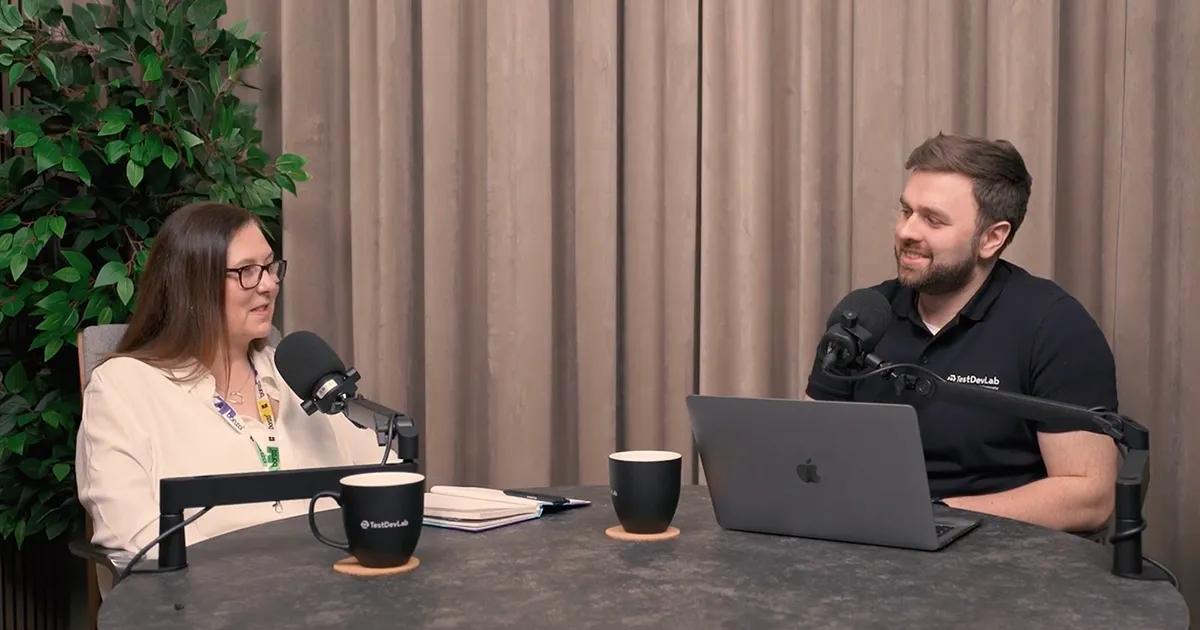
Fiona Ryder, who was a guest on our Tech Effect podcast recently, came to this problem from an unusual vantage point. Her background spans film school, a long career on the tech side of the entertainment industry, leadership of a television station, building and scaling an e-learning platform, and a childhood shaped by a father who was a physics lecturer, a mother who trained as an actress, and an older brother whose studio introduced her to Bowie, Kraftwerk, Queen, and Pink Floyd before she was old enough to understand what she was hearing. That combination—technical rigor, creative immersion, and commercial experience across multiple industries—is what she brought to the problem of real-time music collaboration when she co-founded Bonza Music.
The problem, as she frames it, is structural. The tools everyone uses for remote collaboration were built for meetings. They tolerate the latency levels that make spoken conversation comfortable, somewhere in the range of 150 to 400 milliseconds roundtrip, because human speech is forgiving of small delays. Music is not. For musicians playing together in real time, latency above roughly 30 milliseconds on a one-way leg destroys the experience entirely. You can no longer play together, you can only take turns.
Beyond latency, there is the question of presence. Making music with other people is an embodied, spatial experience. You hear the drummer behind you, the guitarist to your left, the vocalist in front. You adjust your playing in response to subtle shifts in what you hear from others. That spatial reality has no analogue in a standard video call, where everyone appears in equal-sized boxes on a screen and the audio is flattened into a single sterile mix.
Bonza was built to solve both problems, and to do it in software, without requiring specialized hardware, at a price point that does not exclude the musicians who need it most.
TL;DR
30-second summary
What does building technology for creative professionals require that building for knowledge workers does not — and what does solving real-time music collaboration teach about latency, spatial audio, and the discipline of invisible design?
According to Fiona Ryder, co-founder of Bonza Music and recent guest on the TechEffect podcast:
- The remote collaboration problem has been solved for knowledge workers and ignored for musicians. Standard video calling tolerates 150–400 milliseconds of roundtrip latency, enough for comfortable speech. For musicians playing together in real time, latency above roughly 30 milliseconds on a one-way leg makes genuine collaboration impossible. The problem is structural, not fixable with better bandwidth, and no mainstream tool has seriously attempted to address it.
- Honesty about physical constraints is itself a product decision that builds trust. Broadband connections carry data at roughly two-thirds the speed of light, and real-world routing reduces the theoretical maximum further. Bonza works reliably for collaborators within approximately 3,000 kilometers of each other, and says so explicitly. In a market where most products oversell capability and quietly work around limitations, transparency about what a product cannot do is a competitive differentiator.
- Invisible technology is the hardest design standard to meet, and the only one worth targeting for creative users. If a musician is thinking about Bonza's technology while using it, the product has failed. Getting to truly invisible required rebuilding the interface from scratch after real user testing revealed that the team's assumptions about what was intuitive were not shared by the people who actually needed it, one of the most common and most costly mistakes in product development.
- Spatial audio is the technical core of presence, and presence is what makes collaboration feel real. Bonza physically measures the acoustic properties of real venues through audio sweeps and binaural room impulse responses, turning those measurements into settings musicians can switch between in a session. Each collaborator positions others independently in their virtual space, hearing a personalized mix that reflects their own spatial arrangement, just as they would on a real stage.
- AI works in music as an assistant, not an author, and the distinction has both aesthetic and economic consequences. The unpredictability that makes live human collaboration worth having is precisely what AI optimizes away. The sustainable use cases are assistive: backing tracks for demos, educational feedback, arrangement communication before studio sessions. AI that replaces human creative output rather than enhancing it faces a financial model that listeners may ultimately not sustain.
Bottom line: According to Fiona Ryder on TechEffect, building technology for creative professionals requires the same discipline as building for any demanding user. Start from a genuine unsolved problem, design obsessively for the feeling of use rather than the specification of features, be honest about constraints that cannot be engineered away, and be willing to rebuild when the people you built it for tell you it does not work.
The physics problem nobody is going to solve
There is a clarity in how Ryder talks about what Bonza can and cannot do that is rare in technology marketing. Most products oversell capability and quietly work around limitations. Bonza's team made a different choice.
"We haven't broken the laws of physics and we will tell everyone that repeatedly. So if you can't do a ping test between London and a foreign capital somewhere, you're not going to be able to collaborate live."
The constraint is real and worth understanding. Broadband connections carry data at roughly two-thirds the speed of light. Even holoCore fiber, a newer technology that Microsoft has invested in, operates at about 90% of the speed of light. And at the speed of light, the roundtrip distance that fits within 30 milliseconds is approximately 9,000 kilometers in ideal conditions, which real-world routing, switching, and processing reduces dramatically. In practice, Bonza works reliably for collaborators within about 3,000 kilometers of each other.
That covers most real-world use cases. Musicians tend to collaborate with people who live nearby. A band in London rehearsing with a remote member in Warsaw or Stockholm or Leipzig has no problem. A session between London and Shanghai does not work, and Bonza says so.
This kind of honesty about constraints is itself a product decision. It builds trust with users who have been burned by tools that promised capabilities they could not deliver, and it focuses the product's energy on doing the things it can do exceptionally well.
Why invisible technology is the hardest kind to build
The standard way to demonstrate that a product is sophisticated is to show its features. Bonza's founding insight goes in the opposite direction.
"We want our tech to be invisible. If anyone is thinking about our technology when they're using Bonza, we've sort of missed it. You know, the best tech should be invisible. It should be like magic really."
The analogy Ryder uses is the light switch. Nobody flicks a switch and thinks about how electricity works. They just expect the light to come on. The goal for Bonza is that a musician puts on headphones, joins a session, and immediately forgets they are not in the same room as their collaborators. The technology—the ultra-low latency audio pipeline, the spatial audio processing, the binaural room impulse responses measured from real venues—should be entirely beneath the surface of the experience.
Getting there required rebuilding the interface from scratch. Early versions that seemed intuitive to the team failed in testing with real users. That discovery, that the team's assumptions about what was obvious were not shared by the people who actually needed the product, is one of the most common and most costly mistakes in product development, and Ryder is direct about having made it.
The spatial audio system is the most technically complex part of this invisible experience. Bonza physically measures the acoustic properties of real venues—the Hope and Ruin in Brighton, Voodoo Daddies in Norwich, recording studios used by major artists—by running audio sweeps and capturing binaural room impulse responses. Those measurements become settings inside the software, allowing musicians to change the acoustic environment of their session at the touch of a button. A machine learning tool helps synthesize spaces that have not been physically measured.
Each collaborator in a session can independently position the other musicians around them in the virtual space, moving them closer or further, adjusting the mix, creating a spatial arrangement that feels natural to them personally. What the guitarist hears is different from what the drummer hears, just as it would be on a real stage.
Building audio or media technology that has to perform flawlessly under real-world conditions?
TestDevLab's audio quality testing services help engineering teams validate what users actually hear, across devices, network conditions, and usage patterns that controlled lab testing consistently misses.
AI as assistant, not author
Ryder's position on AI in music is precise, neither dismissive nor credulous, and grounded in a specific argument about what makes music valuable.
She cites a quote she attributes to a Polish writer: "I don't want AI to do my writing and my art so that I have more time to go and do the laundry and the dishes. It's the wrong way round." The framing matters. AI as a tool that frees up human creative energy is one thing. AI as a replacement for human creative output is something fundamentally different, and the difference is not just aesthetic but economic. If listeners eventually reject AI-generated music in favor of human performance, the financial model behind AI audio will not be sustainable.
Her practical case is the happy accident. Sting's well-known bum note at the start of a recording, sitting on a piano key by accident, producing an imperfect opening that became part of the song's character, would never survive an AI generation process tuned for technical correctness. The unpredictability that makes live human collaboration worth having is precisely what AI optimizes away.
The use cases where she sees AI working well for music are specific. Namely, generating backing tracks for demo purposes, providing educational feedback to learners, helping producers communicate arrangements before going into studio. These are assistive uses that enhance what a human is doing rather than replacing the human in the creative loop.
Integrating AI into a creative or media product and need to validate it performs the way you intend?
TestDevLab's AI-augmented testing services help teams build evaluation frameworks that catch AI failure modes before users do, not after.
Building a team for a problem you cannot fake
The technical challenges Bonza has solved are not trivial. Ultra-low latency audio at the quality level musicians demand, running on standard consumer hardware without overloading the CPU, synchronized with low-latency video, across proprietary spatial audio processing. This is not a problem that gets solved by developers who do not understand what it is supposed to feel like.
Ryder's solution to this was to find people who play. Almost everyone at Bonza plays an instrument. The team includes spatial audio C++ specialists, front-end developers, and designers, nearly all of whom have personal experience of the pain the product is solving. They understand the issue not as an engineering problem abstracted from experience, but as something they have felt.
The IP that forms the basis of the ultra-low latency system was purchased from a German professor who had spent twenty years working on the problem and continues to lead R&D at the company. The spatial audio engine was developed with the audio lab at the University of York. Both relationships brought academic depth to problems that commercial shortcuts would not have solved.
"Without a brilliant team, we are nowhere. This is all about people pulling together, moving in one consistent direction, and being passionate about it. And if we lose that, we're dead."
The team has been built almost entirely through the founding network rather than open advertising. When Bonza did run one job posting, it received 480 applications—a signal that the mission itself is attracting people rather than the company needing to sell itself to candidates.
The lesson that took the most businesses to learn
Ryder has built, scaled, and in some cases exited businesses across music, television, and education technology. Asked what she would tell her younger self, her answer cuts through the usual entrepreneurial advice.
"The biggest mistake is not listening to other people when they've got a decent opinion. Don't necessarily assume they're perfect, but keep your ears open. Keep an open mind."
This is a different lesson from the standard founder advice about conviction and persistence. Not because conviction does not matter, but because conviction without listening produces products that the team believes in and users do not use. The two qualities are not in tension if they are applied correctly: hold firm on the problem you are solving, stay genuinely open on how you are solving it.
The Bonza interface rebuild is the concrete example. The team had conviction about the product and were willing to be wrong about the implementation when users showed them they were. That combination—stubborn about the mission, humble about the execution—is what produced a product that makes people grin when they put the headphones on for the first time.
Essentially, building technology for creative professionals requires the same discipline as building for any demanding user. Start from a genuine unsolved problem, design obsessively for the feeling of use rather than the specification of features, be honest about constraints that cannot be engineered away, and be willing to rebuild when the people you built it for tell you it does not work.
→ Listen to the full conversation with Fiona Ryder on the Tech Effect podcast
Key takeaways
The tools built for meetings have never worked for music, and that gap was never properly addressed. Conference call platforms tolerate latency levels that destroy real-time musical performance. Bonza was built specifically around the latency and presence requirements that musicians actually have, rather than adapting a tool designed for a different purpose.
The best technology is invisible. If users are aware of the technology while using it, the product has not finished its job. The goal is an experience so seamless that musicians forget they are not physically present with each other, which requires both technical excellence and obsessive attention to interface design.
AI belongs in the assistive layer of music creation, not the authorial layer. The unpredictability of human collaboration—the mistakes, the spontaneous deviations, the imperfect moments that become defining—is precisely what makes music emotionally resonant. AI optimizes for technical correctness and eliminates exactly that quality.
The physics cannot be negotiated, and being honest about it builds trust. Ultra-low latency audio collaboration has a geographic limit imposed by the speed of light and real-world network routing. Bonza works within approximately 3,000 kilometers. Beyond that, the constraint is physics, not software, and Bonza says so clearly.
Building for a creative audience requires experiencing the problem yourself. Almost everyone at Bonza plays an instrument. The spatial audio expertise came from academic researchers who had spent twenty years on the problem. Domain experience is not a nice-to-have—it is what allows a team to recognize when a solution actually works rather than just when it meets a specification.
Conviction about the mission and openness about the execution are not in conflict. Hold firm on the problem. Be genuinely willing to be wrong about how you are solving it. The Bonza interface was rebuilt from scratch when real-world testing revealed the first version missed the mark. That willingness is what eventually produced something that works.
FAQ
Most common questions
Why can't musicians use standard video calling tools for real-time collaboration?
Standard video calling is designed for speech, which tolerates roundtrip latency of 150–400 milliseconds comfortably. Music is far less forgiving. Latency above roughly 30 milliseconds on a one-way leg makes it impossible for musicians to play together in real time. Rather than responding to each other naturally, they can only take turns. The problem is structural and cannot be fixed with faster internet alone.
What are the real physical limits of real-time music collaboration over the internet?
Broadband connections carry data at roughly two-thirds the speed of light, and real-world routing, switching, and processing reduce the theoretical maximum further. In practice, Bonza works reliably for collaborators within approximately 3,000 kilometers of each other. A session between London and Warsaw works. A session between London and Shanghai does not, and Bonza communicates this clearly rather than obscuring the constraint behind vague capability claims.
What is spatial audio and why does it matter for music collaboration?
Spatial audio recreates the physical experience of being in a room with other musicians, hearing the drummer behind you, the guitarist to your left, the vocalist in front. Bonza achieves this by physically measuring the acoustic properties of real venues through audio sweeps and binaural room impulse responses, turning those measurements into software settings. Each collaborator positions others independently in their virtual space, creating a personalized mix that reflects their own spatial arrangement rather than a flattened stereo mix.
What does invisible technology mean as a design principle for creative tools?
Invisible technology means the user never thinks about the product while using it, they only experience the outcome. For Bonza, success means a musician puts on headphones, joins a session, and immediately forgets they are not in the same room as their collaborators. Getting there required rebuilding the interface from scratch after real user testing revealed that what the development team found intuitive was not what musicians who needed the product found intuitive. A distinction that only becomes visible when you test with the people you actually built it for.
What role should AI play in music creation?
AI works best in music as an assistant that enhances human creative output rather than replacing it. Practical use cases include generating backing tracks for demos, providing educational feedback to learners, and helping producers communicate arrangements before studio sessions. The unpredictability that makes live human collaboration valuable, like the happy accident, the imperfect moment that becomes the song's defining characteristic, is precisely what AI optimizes away. That loss has both aesthetic and economic consequences that the financial model behind AI-generated music will eventually have to answer for.
Is your technology invisible enough or are your users still thinking about it?
At TestDevLab, we help engineering teams building audio, media, and AI-integrated products validate what users actually experience, not just what the specification describes. If you're building technology that has to disappear into the experience, let's talk about what testing that actually requires.