1
Dataset creation
Balanced datasets with both genuine and deepfake content for rigorous, fair evaluation.
 EN
EN FR
FR DE
DE ES
ES NO
NO SV
SV FI
FI DA
DA LV
LVYour AI works in the demo. We find out if it works in production. LLM evaluation, model testing, deepfake detection, and AI feature QA — backed by the methodology Zoom used to publicly benchmark their AI against competitors.





Traditional QA catches crashes, broken layouts, and failed API calls. It doesn't catch a chatbot that confidently fabricates information. It doesn't flag a transcription engine that falls apart with accented speech. It doesn't measure whether your AI summary dropped the one detail your customer actually needed.
AI failures are subtle, probabilistic, and context-dependent. They don't throw errors, they erode trust. And by the time your users notice, the damage is reputational, not just technical.
Your LLM generates confident, plausible answers that are factually wrong. Users can't tell. Your support team finds out from complaints.
Your model worked at launch. But data drift, new edge cases, and changing inputs have quietly eroded performance and nothing in your monitoring catches it.
Your AI treats some user groups differently than others, or responds to adversarial prompts in ways that create legal and brand risk.
You don't know how your AI features compare to competitors and neither do your customers, which means they're guessing too.
You can't answer "how good is our AI?" with a number. Stakeholders, customers, and regulators are starting to ask.
We test the full stack — from the model's accuracy to the feature your users actually see. Every engagement is scoped to your technology, your use cases, and the quality questions your team needs answered.
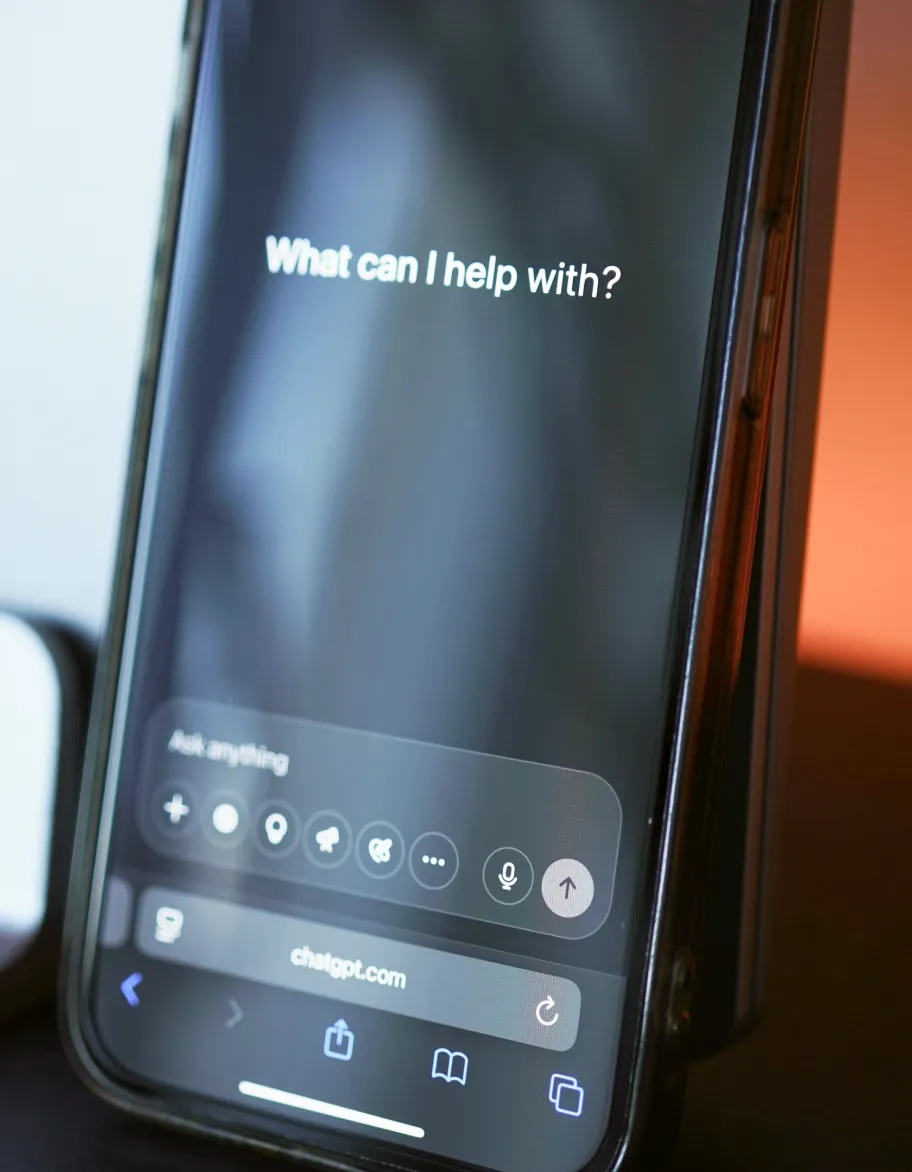
Chatbots, assistants, summarization, and content generation. We evaluate hallucination rates, intent understanding, toxicity, bias, safety guardrails, and prompt robustness — systematically, not with spot-checks.
Tell us what you're building. We'll tell you exactly how to test it. Talk to an Engineer
You can't test AI the way you test a login form. Outputs are non-deterministic, quality is contextual, and edge cases are infinite. Our AI testing methodology is designed specifically for these challenges. It's the same approach Zoom commissioned us to use when they needed independent, publishable proof that their AI outperformed the competition.
We work with your team to define what "good" looks like for your specific AI features. The conditions, the quality thresholds, and the scenarios that matter for your users and your market.
We prepare tailored test inputs — clean samples, controlled distortions, real-world scenarios — along with human-verified reference outputs that establish the baseline your AI is measured against.
Your AI features are run against the prepared inputs under controlled conditions. All outputs are captured systematically for apples-to-apples comparison.
Generated and reference outputs are cleaned and standardized, removing formatting noise and metadata artifacts so evaluation reflects true content quality, not cosmetic differences.
We extract performance metrics, validate them for statistical reliability, and deliver visual reports that show exactly where your AI excels, where it struggles, and what to fix first.
This methodology is peer-tested. It produced the results Zoom published in their 2025 AI Performance Report.
Every AI testing engagement produces metrics tailored to your technology and use case. These aren't vanity dashboards, they're the numbers your engineering team needs to prioritize, your product team needs to make go/no-go calls, and your leadership needs to report progress.

Word Error Rate (multiple variants for different error types), LLM-as-a-judge qualitative evaluation, and Speaker Label Accuracy.
Custom composite evaluation scores combining completeness, accuracy, and entity recognition.
Custom composite evaluation scores combining completeness, accuracy, and entity recognition.
MetricX and COMET — industry-standard metrics that let you benchmark against competitors and track improvement over time.
Answer status (boolean pass/fail or multi-level quality scale), usefulness-aware scoring that distinguishes partial answers from wrong answers, and response latency from prompt to complete output.
Which features or models perform well on clean inputs and where they break under real-world conditions.
Cases where a transcript is technically "correct" by WER but practically unusable for the end user.
Whether the improvements your team shipped actually delivered measurable, user-visible quality gains.
How your AI features stack up against alternatives in the market.
Want to see what our reports look like? Request a sample report
Your model's ceiling is your data's quality. Inaccurate labels don't just reduce accuracy, they embed biases and failure modes that are expensive to diagnose after deployment.
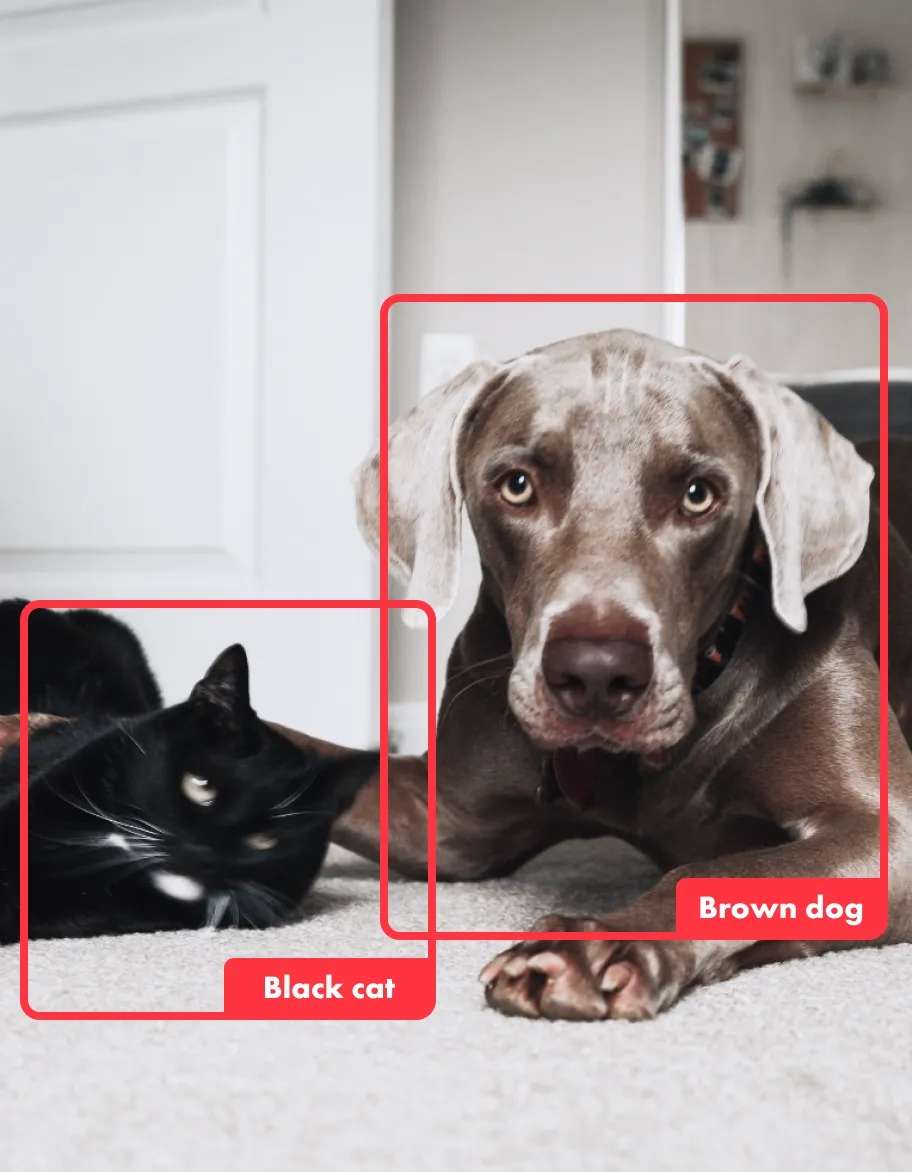
Our Europe-based annotation team creates clean, high-quality baseline datasets through human-in-the-loop labeling — the precision that automated tools alone can't guarantee, especially for ambiguous or domain-specific content.
Once a reliable baseline is established, we extend your datasets algorithmically at scale, generating synthetic variations, augmenting edge cases, and validating everything against ground truth. Larger, more diverse training sets without sacrificing quality.
Need training data you can trust? Let's talk!
Deepfakes are a business risk for platforms evaluating user-uploaded content, for organizations concerned about synthetic media targeting their brand, and for any company whose trust depends on media authenticity.
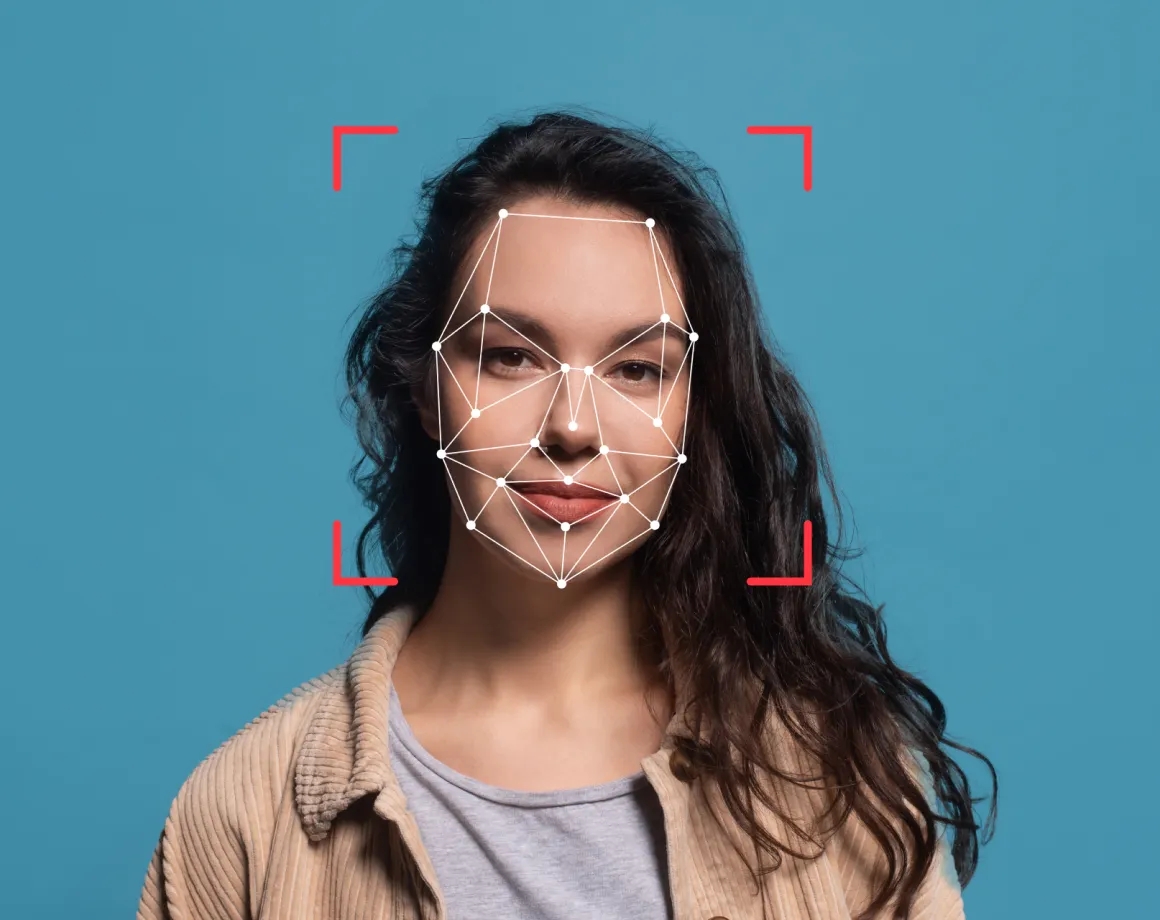
We provide two services: direct analysis of your media (images, video, audio, text) to determine if it's been synthetically manipulated, and independent evaluation of your deepfake detection tools against curated datasets to measure real-world reliability.
End-to-end project management with optional subscription access for continuous monitoring.
Concerned about deepfakes? Get an independent assessment
The organizations leading on AI quality aren't just testing more. They're testing differently. With independent methodology, tailored metrics, and results that hold up to scrutiny.
Catch hallucinations, accuracy degradation, and edge case failures before they reach users, not after your support queue tells you about them.
Remove the uncertainty that slows go/no-go decisions. When your team has metrics, they ship with confidence instead of hesitation.
Fix AI failures at test time, not in production. The earlier a failure is found, the cheaper it is to resolve.
Independent, methodology-backed results your team can show to customers, regulators, and leadership, not just internal dashboards.
Know exactly how your AI features compare to alternatives in the market, before your customers find out for themselves.
AI failures erode trust quietly and quickly. Independent validation gives you the evidence that your AI is ready before it's exposed.
Zoom didn't ask us to make them look good. They asked us to tell the truth.
Zoom needed independent, third-party evidence that their AI meeting features outperformed competitors. Internal benchmarks wouldn't be credible enough for public claims. They needed an evaluation their customers and the market would trust.
We designed and executed a competitive evaluation of AI-powered meeting features across multiple vendors in real-life scenarios. Transcription and post-meeting summary quality were compared using Word Error Rate analysis and LLM-based quality evaluation, capturing both statistical accuracy and real-world usability.
Key results:
Zoom published our findings in their public AI Performance Report, giving prospective customers independent, credible evidence of their platform's quality advantage. The evaluation became a marketing and sales asset, not just a QA exercise.
Read the Zoom AI Performance Report 2025
Want results your customers and market will believe? Let's design your evaluation
You need to know if your AI is production-ready, not based on internal demos, but on independent, metrics-driven evaluation against real-world conditions. You need a QA partner who understands AI failure modes, not just traditional software bugs.
You're shipping AI features on a deadline and need quality data to make go/no-go decisions. You need to know which features are ready, which need more work, and how you compare to competitors — before launch, not after.
You're about to put your AI product in front of customers or investors. You need independent validation that it works, a credible quality baseline that builds confidence in your product and your team.
You operate in an environment where AI decisions carry compliance, safety, or legal implications. You need documented, auditable evaluation with defensible methodology — not a spreadsheet from your own team.
Whichever role you're in, the first step is the same Get a free assessment
Most QA teams learn what to look for by reading about AI failures. We've spent years finding them — across LLMs, ML models, computer vision, transcription, and AI-powered features in production. That experience shapes every test we design, every metric we choose, and every report we deliver.

We don't build AI products. We don't sell AI tools. Our only incentive is accurate evaluation which is why companies like Zoom trust us to produce results they publish publicly.
See the difference in your first engagement Request a consultation
No lock-in! Every engagement starts as a standalone project. You scale only if the results justify it.
Independent, metrics-driven AI testing that gives your team the evidence to ship with confidence and gives your customers the proof to trust what you've built.