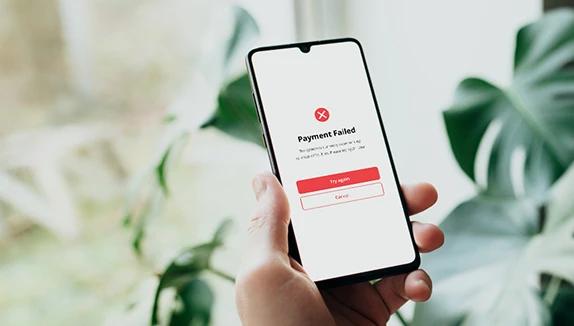


Most QA teams understand negative testing in principle. Submit an empty form, send a string where a number should be, confirm the system rejects it gracefully, and move on. The problem is that this version of negative testing tends to catch the scenarios that are obvious enough to anticipate, and miss the ones that actually reach production.
The scenarios that cause real incidents rarely look like classical negative tests. They aren't malicious, they aren't boundary values in the textbook sense, and they aren't exotic. They're the ordinary, predictable ways real users and real systems deviate from the happy path – two tabs open at once, a session that expired mid-form, or a time zone crossing a DST boundary. Individually, none of them seem like something a QA team would miss. Collectively, they account for a significant share of the production bugs that slip past otherwise mature test suites.
In this article, we’ll walk through eight of them. Not because they are the eight most important, but because they share a common pattern: they sit in the gap between "the feature works" and "the environment behaves," and that gap is where negative testing most consistently falls short.
TL;DR
30-second summary
Why do production incidents keep slipping past otherwise mature test suites, and which negative testing scenarios are most consistently overlooked?
- Classical negative testing catches input-level bugs, like invalid values, empty fields, and wrong formats, but misses the environmental and sequencing scenarios that cause real production incidents: two tabs open at once, a session that expired mid-form, a slow network that looks like success.
- The DST transition boundary, Unicode normalization mismatches, and names that break Western validation assumptions are three of the most reliably missed negative scenarios — not exotic edge cases, but ordinary conditions that affect real users every day.
- Concurrent session conflicts, where the same record is edited in two browser tabs and the second save silently overwrites the first, represent a failure mode that most applications have no mechanism to detect because optimistic concurrency control was never implemented.
- Third-party integrations should be tested for the path where the service returns HTTP 200 with an incomplete or malformed response — not just "service works" and "service errors" — because the silent success path is where the most damaging integration failures hide.
- The methodology shift that consistently improves negative testing coverage is starting from environmental state rather than input values: asking "what state could the system be in when this action happens?" surfaces a different and more dangerous class of scenarios than "what weird value could go in this field?"
Bottom line: The negative testing scenarios most likely to cause production incidents are not rare or exotic, they are ordinary, predictable, and structurally invisible to test suites designed around the happy path.
What is negative testing and where does it matter most?
Negative testing, at its core, is the practice of verifying how software behaves when it receives invalid inputs, conditions, or sequences it wasn't designed to handle (for example, special characters, incorrect formats, and so on). Positive testing, on the other hand, confirms that the system does what it's supposed to do. Negative testing confirms that the system fails the way it's supposed to fail: with clear errors, controlled recovery, no silent data corruption, no exposed internals, or undefined behavior.
The distinction matters because the set of things a system is supposed to do is always smaller than the set of things users, networks, browsers, and integrations will actually throw at it. Happy paths represent a narrow slice of real-world usage. Everything else – the accidental double-click, the stale session, the malformed response from a third-party API – falls into territory that only negative testing covers.
In practice, this form of testing is especially prominent in:
- Financial and payment systems, where silent failures translate directly into lost money, duplicate charges, or compliance violations.
- Healthcare and regulated industries, where incorrect handling of unexpected inputs can cause both patient harm and regulatory penalties.
- Public-facing web and mobile applications, where the diversity of user behavior, devices, and network conditions makes assumptions about input cleanliness impossible to defend.
- APIs and integration-heavy architectures, where the failure modes of upstream services are often the single largest source of incidents.
- Any system handling user-generated content, where the input space is effectively unbounded.
What these domains have in common is that the cost of an unhandled edge case is disproportionately high relative to the cost of testing for it. That imbalance is what makes negative testing worth investing in, and it's also what makes the overlooked scenarios in the next section worth paying attention to.
Not sure whether your test suite covers the environmental and sequencing scenarios that reach production?
Negative testing scenarios you are probably forgetting to test
The duplicated DST hour
Every autumn, clocks in regions that observe daylight saving time fall back an hour. For one day a year, 1:30 AM happens twice. Every spring, 2:30 AM disappears entirely. Systems that record events in local time without storing the UTC offset silently produce ambiguous or impossible timestamps, and most test suites have no scenarios for either case.
In practice, this shows up in appointment scheduling, audit logs, rideshare surge windows, and cron jobs set to run at 2:30 AM. A meeting booked for 1:30 AM on the fall transition day could refer to either of two real moments. A log entry timestamped 2:15 AM on the spring transition day didn't actually happen. Neither is hypothetical; both have caused real outages in production systems.
What to test for: events scheduled exactly on the transition boundary, logs written during the transition, recurring rules set at impossible or ambiguous times, and reports that group events by hour of day.
Unicode normalization mismatches
The string "café" can be encoded in Unicode in two different ways: one as a single precomposed character, the other as "cafe" followed by a combining accent. Visually, they are identical. To a byte-level comparison, they are completely different strings. Most input fields don't normalize before saving, and most comparisons don't normalize before matching.
Consider a user who signs up on their phone (which typically submits in NFC) and later tries to log in from a Mac (which sometimes submits in NFD). Their username doesn't match the stored version – and the resulting "user not found" error gives no hint as to why. The same mismatch creates duplicate accounts, a silently broken search, and deduplication that fails on records that look identical to a human reviewer.
What to test for: account creation, login, and search with inputs containing accented characters, emoji, and CJK characters, submitted from both macOS/iOS and Windows/Android sources.
Names and addresses that break Western assumptions
Form validation tends to encode assumptions that fall apart at the first contact with a real user base. Required last names exclude people with mononyms, whether that's Madonna or any number of users from Indonesian or Burmese cultures. Length caps reject long Spanish or Portuguese names. Apostrophe filters mangle Irish and Scottish surnames, turning O'Brien into OBrien or triggering a SQL-injection warning. ZIP code fields reject valid addresses from countries that don't use them, or that use alphanumeric formats the validation doesn't recognize.
This is rarely a malicious-input issue; it's a real-user issue. And the bugs it produces are particularly damaging because they tend to disproportionately affect specific demographics, adding an inclusion problem on top of the functional one.
What to test for: submissions with single-word names, apostrophes, hyphens, diacritics, non-Latin scripts, and characters at the upper end of reasonable length. For addresses, submissions without postal codes, without house numbers, and from countries with alphanumeric formats.
Two tabs editing the same record
Most applications handle single-user, single-session workflows well. Very few handle the same user editing the same record in two browser tabs simultaneously. The typical failure mode is silent: the second tab to save overwrites changes made in the first, and the user never learns their earlier work was lost.
This comes up more often than teams assume. Users open a record to reference it while editing a different one, get distracted, come back to the wrong tab, and save. Or two team members quietly share a login. Without optimistic concurrency control (a version token checked at save time), the application has no way to detect the conflict, let alone resolve it.
What to test for: opening the same resource in two tabs, modifying each, and saving in both orders. The expected behavior is that at least one tab surfaces a conflict rather than one silently winning.
Slow network, not a failed network
Most teams test "what if the request fails." Far fewer test "what if the request takes 22 seconds?" In practice, slow is often worse than failed. A failed request surfaces an error. A slow request leaves the user staring at a spinning icon, wondering whether their payment went through, whether to refresh, or whether to click submit again.
Each of those reactions creates a distinct failure mode. Refreshing during a payment flow can produce duplicate charges. Clicking submit again can trigger duplicate records. Navigating away mid-upload can corrupt files. All of this is invisible in test environments where the request either succeeds in 200ms or returns a 500 error.
What to test for: submission flows under artificially throttled network conditions, with particular attention to whether submit buttons are disabled during the request, whether idempotency keys prevent duplicates, and whether progress feedback accurately reflects backend state.
Session expiry mid-form
A user begins filling out a 20-field form. They get interrupted, come back 40 minutes later, finish the last three fields, and hit submit. Their session expired during the break. In the worst implementations, the submit fails silently, redirects to a login page, and discards everything they typed.
This is the kind of bug that doesn't show up in short-cycle QA, because no tester sits on a form for 40 minutes. It does show up reliably in production, and it produces the exact kind of frustration that drives abandonment and support tickets.
What to test for: a session kept idle past its timeout while a form is in progress, and the behavior of the submit action afterward. Well-designed systems either refresh the session transparently, warn the user before expiry, or preserve form data and redirect back after re-auth.
Third-party service returns success with an incomplete response
Integration tests usually cover two paths: the third-party service works, and the third-party service returns an error. The third path, where the service returns 200 OK with an empty body, a malformed payload, or a partially populated response, is the one that consistently slips through.
This is harder to detect than a hard failure because the response looks legitimate at the transport level. A payment gateway returns 200 with no transaction ID. An SMS provider accepts the request and quietly never sends the message. An authentication service returns a malformed JWT. From the perspective of the calling code, everything succeeded. From the user's perspective, nothing worked.
What to test for: for every third-party integration, the behavior when the response is valid at the HTTP layer but invalid or incomplete at the application layer. A good integration validates the response shape before trusting it.
If your integration testing only covers service-works and service-errors paths, there's a third path your test suite isn't reaching. Make sure it’s covered.
Permission revoked mid-session
Access control is tested at login. It's rarely tested mid-session. But permissions change. Namely, admins demote users, subscriptions lapse, roles get reassigned, and a browser tab that was loaded with admin-level privileges may still be sitting open an hour after those privileges were taken away.
The consequences depend on the implementation. In the best case, the next backend call returns a 403, and the UI handles it gracefully. In the worst case, the client UI still exposes admin controls that the server no longer enforces restrictions on, meaning a former admin can still make privileged requests directly, regardless of what the interface shows. Or worse, the server trusts the stale session, and the client doesn't double-check.
What to test for: revoking a user's privileges while they have active tabs open, then verifying every sensitive action fails at the server layer and the UI updates to reflect the new permission state.
Risks of not conducting thorough negative testing

The scenarios above aren't isolated curiosities. They're representative of a pattern, and that pattern has consequences that extend well beyond individual bugs.
The most immediate risk is silent data corruption. Many of the overlooked scenarios fail quietly: a saved record that loses half its fields, a transaction that partially completes, a user account created as a near-duplicate of an existing one. These failures rarely surface until much later, often when a support ticket or an audit surfaces the downstream effects, by which point the corruption has propagated through backups, analytics, and dependent systems. The cost to untangle is almost always higher than the cost would have been to catch it at the source.
Security exposure is the second concern, and it's often more subtle than the typical SQL-injection framing suggests. This includes things like a stale session that retains admin privileges, a third-party response that wasn't validated, or a form that accepts characters it shouldn't. Each of these is a surface that can be exploited, whether deliberately by an attacker or accidentally by a confused user. The absence of negative testing around environmental and sequencing scenarios is a frequent source of vulnerabilities that pass every positive-path security scan.
Regulatory and compliance exposure compounds both of the above. Regulations like GDPR, HIPAA, and the various financial reporting frameworks don't distinguish between "we didn't think about that case" and "we knew about it and ignored it." A data breach caused by an unhandled edge case is still a data breach. A compliance failure caused by a silent transaction error is still a failure.
And finally, there's the reputational dimension. Users don't file bug reports in most of these scenarios. They abandon the purchase, close the tab, delete the app, and tell their colleagues not to use it. The feedback loop is invisible, which makes the damage easy to underestimate until it shows up in retention metrics.
How to improve your negative testing scenarios
Improving negative testing isn't primarily a tooling problem, it's a methodology problem. The teams that consistently catch the overlooked scenarios, using methods aside from exploratory testing, tend to share a few practices that are worth adopting deliberately.
Start from the environment, not the input
Most negative test design begins with a field and asks, "What weird values could go in here?" That framing catches input-level bugs but misses everything sequencing-related. A more productive starting point is to ask, "What state could the system be in when this action happens?" Session expired, network slow, third-party degraded, permissions changed, another tab open – these are environmental questions, and they surface a different class of scenarios than input-level ones.
Build a library of "conditions," not just "cases"
Traditional negative test cases are single-action. The scenarios that slip through are usually multi-step sequences involving the environment. Maintaining a shared list of conditions, such as stale session, slow network, concurrent session, permission change mid-session, DST boundary, and non-ASCII input, allows testers to systematically overlay them onto existing test cases rather than trying to remember them case by case.
Collaborate across disciplines
Many of the scenarios covered above sit in the seams between testing, development, infrastructure, and product. A pure QA perspective will miss some of them, while a pure development perspective will miss others. Teams that include not only product owners, security, and infrastructure engineers, but also real users and focus groups in test planning and execution tend to produce substantially more coverage than teams that treat testing as a purely QA-owned activity.
Treat production as a source of test cases
Every support ticket, every incident report, every unexpected log line is a negative test scenario that was missed. Feeding those back into the test suite closes the loop between what was supposed to happen and what actually does. The teams that do this well tend to have dramatically tighter coverage over time than those that treat production issues as one-off fixes.
Automate the repeatable parts
Many of these scenarios can be automated once and re-run cheaply. This can be done especially well using AI agents, like our own BarkoAgent. The barrier is usually the setup effort, not the ongoing cost. Investing in the fixtures and mocks that make these conditions easy to reproduce pays off on every subsequent project.
Building this methodology internally takes time most QA teams don't have. Our QA engineers can run the scenarios you're missing.
Advantages of thorough negative testing

When negative testing is treated as a first-class activity rather than an afterthought, the advantages extend beyond the obvious bug counts.
The most direct benefit is a reduction in production incidents. The scenarios that tend to slip through positive-path testing are also the ones most likely to cause user-visible outages, data loss, and support escalations. Closing those gaps upfront means fewer late-night deploys, emergency rollbacks, and apology emails that consume disproportionate engineering time.
System resilience is the second benefit, and it tends to compound. Software that has been systematically tested against unexpected inputs, conditions, and sequences behaves differently under real-world stress than software that has only been validated against the happy path. It produces useful error messages, and it doesn't corrupt the state when something unexpected happens. Over time, this resilience translates into systems that are easier to extend, easier to integrate with, and safer to change.
Team confidence is a less-discussed but equally real benefit. Engineers who know that the test suite covers the environmental edge cases are more willing to ship changes quickly. Product teams who know that the QA process catches the overlooked scenarios are more willing to commit to aggressive timelines. The cultural effect of strong negative testing is often a faster, not slower, development cycle, because the friction of defensive caution gets replaced by the speed of earned trust.
And finally, there's an improved user experience. The scenarios covered in this article aren't rare. They're ordinary things that happen to real users every day, and when software handles them gracefully, users notice, not consciously, but in the form of a product that just seems to work. That quality is difficult to articulate, difficult to measure, and difficult to replicate without the underlying discipline that produces it.
Main takeaways
Negative testing done well is not about cataloguing every possible weird input a user could submit. It's about recognizing that the gap between how software is designed to be used and how it is actually used is wider than most teams assume, and that the scenarios living in that gap are the ones most likely to cause real damage in production.
The eight scenarios in this article are a starting point, not a checklist. The deeper point is that the process of finding overlooked cases is itself a discipline: one that rewards curiosity, cross-disciplinary input, and a willingness to ask "what state could the system be in?" rather than just "what value could be in this field?" Teams that build that discipline into their testing culture tend to ship software that holds up under conditions the happy path never anticipated, and, in practice, that difference is what separates products users trust from products users tolerate.
The scenarios you're probably forgetting to test aren't rare, they're common. And that's exactly why they're worth testing for.
FAQ
Most common questions
What is the difference between negative testing and positive testing, and why does the distinction matter?
Positive testing confirms that a system does what it is supposed to do under expected conditions. Negative testing confirms that the system fails the way it is supposed to fail—with clear errors, controlled recovery, no silent data corruption, and no exposed internals—when it receives invalid inputs, unexpected sequences, or conditions it was not designed to handle. The distinction matters because the set of things a system is supposed to do is always smaller than the set of things real users, networks, browsers, and integrations will throw at it, and everything outside that set is territory only negative testing covers.
Why do so many negative testing scenarios slip past mature QA teams?
Most negative test design starts with a field and asks what weird values could go in it, a framing that catches input-level bugs but misses everything related to environmental state and sequencing. The scenarios that cause real incidents are usually multi-step and context-dependent: a session that expired while a form was in progress, a record edited simultaneously in two browser tabs, a third-party service that returns HTTP 200 with an incomplete response. These require a different starting question: not "what value could break this field?" but "what state could the system be in when this action happens?"
Which industries face the highest cost from overlooked negative testing scenarios?
Financial and payment systems, where silent failures translate directly into duplicate charges, lost transactions, or compliance violations. Healthcare and regulated industries, where incorrect handling of unexpected inputs can cause patient harm and regulatory penalties. Public-facing web and mobile applications, where the diversity of user behavior, devices, and network conditions makes assumptions about input cleanliness indefensible. APIs and integration-heavy architectures, where upstream service failure modes are often the single largest source of production incidents. What these domains share is that the cost of an unhandled edge case is disproportionately high relative to the cost of testing for it.
How should teams build negative testing coverage systematically rather than relying on individual testers to remember edge cases?
By maintaining a shared library of environmental conditions, stale session, slow network, concurrent session, permission change mid-session, DST boundary, non-ASCII input, that testers can systematically overlay onto existing test cases rather than trying to recall them scenario by scenario. This reframes negative testing from a memory exercise into a systematic methodology: for each feature under test, apply the condition library and ask whether the system handles each combination correctly. Feeding production incidents back into the test suite as new conditions closes the loop between what was anticipated and what users actually encounter.
What are the security implications of overlooked negative testing scenarios?
Several of the most commonly missed scenarios create exploitable surfaces: a stale session retaining admin privileges after permissions are revoked, a third-party response that was not validated at the application layer despite returning HTTP 200, form inputs accepting character sequences the validation logic was not designed to handle. These exposures are subtle because they pass every positive-path security scan. They require negative testing of environmental and sequencing conditions to surface. The absence of this testing is a frequent source of vulnerabilities that look like security gaps but originate in QA methodology.
Is your test suite covering the scenarios that actually reach production or just the ones you anticipated?
TestDevLab's QA engineers systematically test the environmental and sequencing conditions that classical negative testing misses, like concurrent sessions, DST boundaries, third-party partial failures, session expiry mid-flow, and the rest.