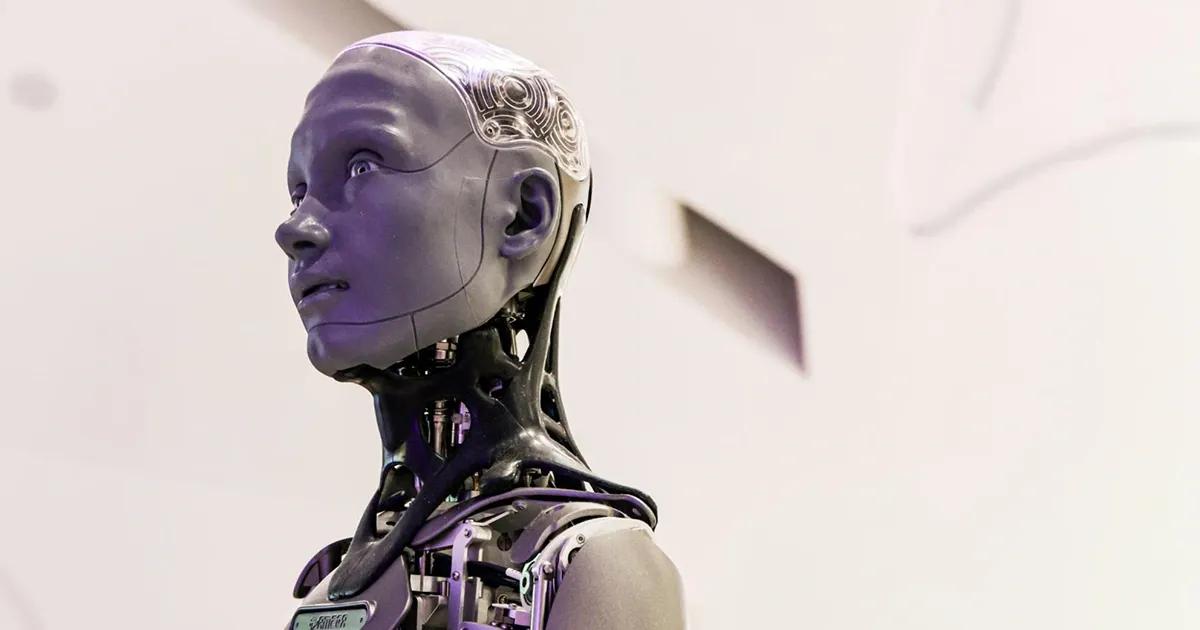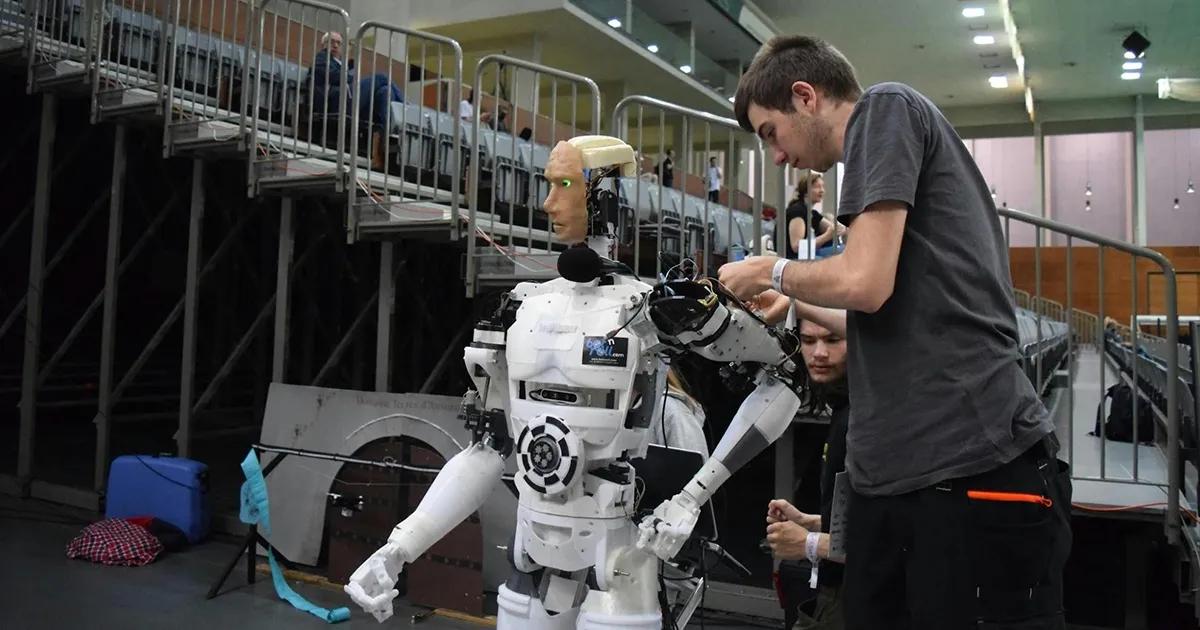


Humanoid robots are already working in real-world environments, like Tesla Optimus, Figure 02 & Figure 03, Boston Dynamics’ electric Atlas, and Agility Robotics’ Digit. At Tesla’s Fremont factory, they sort battery cells, and at BMW’s facility they work the line alongside humans. These robots are also being trialed by Amazon and Hyundai. This is a huge shift from the choreographed demos of just a few years ago. Now they’re standing next to real people, picking up boxes, and making real-time decisions in an unpredictable environment.
Even though a humanoid robot looks and moves like a human, it doesn’t automatically know how to behave safely around one. That is why testing a humanoid robot is completely different from testing a website or an app. If your app crashes, you can just restart it. But if a 60-kilogram humanoid robot loses its balance or miscalculates how close someone is, that’s not a bug report. That’s someone getting hurt. Testing human-robot interactions has become one of the hardest and most important jobs in robotics today.
In this post, we’ll look at what makes testing humanoid robots so tricky, point to real examples from companies, share some numbers that put the stakes in perspective, and discuss what good testing really looks like.
TL;DR
30-second summary
What is human-robot interaction testing, and why is it so different from testing software?
- Human-robot interaction (HRI) testing checks whether a robot works with people, not just whether it works. A robot arm can be mechanically flawless and still fail at HRI if it moves in an unpredictable or unsettling way near a person. The stakes are physical: if an app crashes you restart it, but if a 60-kilogram humanoid loses its balance or miscalculates distance, someone gets hurt.
- Humanoid robots are tested in layers, starting in simulation. They are tested first entirely in simulation, then in a physical lab, and only then around real workers in a small contained area. Boston Dynamics reports training more than 4,000 digital Atlas robots in parallel across environments like slippery floors and inclines.
- Even leading teams keep finding failures through testing. A Tesla Optimus unit collapsed at a December 2025 demo, a Figure 02 unit's forearm emerged as a main failure point, and an Atlas unit suffered a hydraulic leak mid-parkour. Each is the kind of edge case testing exists to surface before a robot works near people.
- Passing safety checks isn't the same as being safe for a workplace. Waymo's 220 million driverless miles point to 94% fewer serious or fatal injury crashes than human drivers, while Amazon facilities using robots had a serious injury rate more than 54% higher than those without. Testing whether a robot avoids injuring someone directly doesn't test what it does to a workplace overall.
- Good HRI testing covers four areas, and the last one never ends. Physical safety limits follow standards like ISO/TS 15066, which defines four ways a robot can safely work near humans. Simulation, usability checks on trust, training, and signaling, and continued monitoring after launch complete the picture.
Bottom line: Good HRI testing combines hard engineering limits, heavy simulation, careful real-world piloting, and honest monitoring after launch. A robot can be mechanically safe and still cause harm if it quietly changes how people are forced to work, so the companies that take this testing seriously are the ones people will trust enough to work beside.
What is human-robot interaction?
Human-robot interaction, or HRI, is the field that studies how people and robots interact, communicate, and work safely with each other. It’s about the whole relationship between a robot and a human sharing the same space, doing the same task, or sharing the same conversation. HRI covers a wide range of situations including physical interactions, communication, and trust.
Researchers in this field borrow from a mix of disciplines: robotics and engineering, psychology, design, and sociology. A robot arm can be mechanically flawless but still fail at HRI if it moves in an unpredictable or unsettling way towards the person standing nearby. This is exactly why testing HRI is different from testing the robot’s hardware. One checks if the machine works, the other one checks whether it works with people and how.
Why testing humanoid robots is so different
When QA engineers test normal software, they’re usually dealing with predictable inputs that either succeed or fail. Human-robot interaction testing is nothing like that. The robot has to work in a messy, changing environment: uneven floors, people, shifting light, random objects on the floor, and many other situations engineers may not even think about.
That’s why humanoid robots are usually tested in layers. First the robot is tested entirely in simulation, where you can run thousands of scenarios without any real risk. Then it moves to a physical lab, and only after that does a robot get tested around actual workers, usually inside a small, contained area. Boston Dynamics reports practicing tasks for millions of simulated hours before hardware testing, and training more than 4,000 digital Atlas robots in parallel in different environments (slippery floors, inclines, etc.).
There’s also a human side that is easy to overlook. Testers have to question whether the robot warns a person before it swings an arm, whether it can stop fast enough when someone gets too close, and whether it moves in a way that’s predictable to the humans around it. A robot can pass every safety check in the lab but still slow everyone down in a real-world environment.
Real examples: What’s actually being tested right now

Let’s look at a few real companies and their approach to humanoid robot testing.
Tesla Optimus
Tesla Optimus robots are currently working inside Tesla’s factories, sorting battery cells and doing light assembly. Since these are Tesla’s own facilities, the company is able to keep the environment tightly controlled and supervised. Reports from late 2025 describe an Optimus unit collapsing at the Miami demo in December 2025. Small as it sounds, that is exactly the kind of failure testing is supposed to catch before a robot gets in a real environment working close to people.
Figure AI
Figure’s robots (Figure 02 and Figure 03) are being piloted in real production settings, like BMW’s factories and, in earlier trials, Amazon warehouses. Figure has made safety-conscious design choices, including soft textiles on the body, and an AI system called Helix, built specifically for working safely alongside people. Yet testing has turned up some failures too: one Figure 02 unit reportedly had the forearm as the main failure point due to the complexity of packing three degrees of freedom, thermal management, and cabling into a human-sized limb. This is not a dangerous defect, but it’s a good example of why testing has to prove more than that the robot avoids hurting someone only. It also has to prove that the robot can successfully handle situations where it gets stuck without any impact on the people around it.
Boston Dynamics’ Atlas
Boston Dynamics retired its older hydraulic Atlas and replaced it with a fully electric version, built for commercial use. This version leans on real-time control loops and motion planners that let it recover its balance after being knocked off balance, using cameras and sensors to react quickly. Yet, during parkour testing, an Atlas unit reportedly failed - a hydraulic fluid leak caused a hard collapse mid-course. Even advanced engineering teams are still finding real-world edge cases through testing.
Surgical robots
Humanoid robots aren’t the only machines that need careful human-interaction testing - surgical robots have been dealing with this for over 20 years. Take Intuitive Surgical’s da Vinci system as an example. An FDA survey of surgeons found their biggest struggles included hand-eye coordination, getting used to the foot pedals, and learning how to position the robot’s arms so they don’t collide with each other during surgery. The learning curve isn't so different from what a factory worker goes through adapting to work alongside a humanoid robot. Testing is about training the humans as well.
Make every robot-human interaction safer
We test humanoid robots against the conditions they'll actually face, from sensor accuracy and real-time inference latency to failure mode safety.
The numbers: Why this matters
Statistics from robots already deployed at scale tell two opposite stories.
The first story about self-driving cars from Waymo (which, at their core, are just robots interacting with humans on the road), shows what can be achieved through testing. Waymo has now driven over 220 million miles without a human driver behind the wheel. Data reviewed by outside researchers points to 94% fewer crashes causing serious or fatal injuries and 93% fewer crashes causing pedestrian injuries, compared to human drivers over the same distance. That’s a huge point to what massive, patient testing can do before a technology gets deployed at scale.
The second story about warehouse robotics offers a warning worth sitting with. Studies of Amazon’s robotic fulfillment centers found that facilities using robotic technology had a serious injury rate of 7.9 per 100 workers, more than 54% higher than facilities without robots that same year. One facility in Tracy, California, saw its injury rate almost triple, going from 3.9 per 100 workers in 2015 to 11.3 per 100 workers in 2018.

What matters here is that testing whether a robot avoids injuring someone directly is not the same as testing what that robot does to a workplace overall.
What good testing actually involves
Testing a humanoid robot for safe human interaction usually comes down to a few core areas.
Physical safety limits
International standard ISO/TS 15066 sets rules for how much force and speed a collaborative robot is allowed to use around people. It includes data, developed with Johannes Gutenberg University Mainz, on how much force and pressure is safe, and that data shapes how robots get designed and tested. The standard outlines four ways a robot can safely work near humans: a safety-rated monitored stop, hand guiding, speed and separation monitoring, and power and force limiting. Any serious humanoid robot company has to test against limits like these.
Simulation-based testing
Long before any human stands near a robot, engineers run huge numbers of scenarios in simulation. Simulating human behavior lets QA teams generate realistic test cases automatically. This saves on renewing the robot's broken parts and is safer than testing exclusively in the real world.
Usability, training and trust
Testing human-robot interaction also has to answer questions like these before a robot goes into a real-world environment.
- Trust. Do people trust the robot enough to work efficiently around it?
- Training. Are people trained enough to work with a robot?
- Signals. Does the robot signal what it’s about to do next?
The da Vinci FDA report is a good illustration here. Even highly trained professionals need real time to learn a system before they can use it.
Real-world monitoring after launch
Testing doesn’t stop once a robot gets into a production environment. For example, Waymo openly publishes safety data from millions of real miles and keeps updating it over time. That kind of ongoing, transparent monitoring matters as much as pre-launch lab testing, because real environments will always produce situations no lab could fully predict.
Conclusion
Robots are moving out of physical labs and onto real factory floors faster than expected. That raises the stakes for testing. Unlike a typical piece of software, a mistake in human-robot interaction testing can mean an actual physical injury, not just a bug ticket. The examples here—Tesla Optimus, Figure’s robots, Boston Dynamics’ Atlas, even surgical robots like da Vinci—all point to the same conclusion: good testing has to combine hard engineering limits, heavy use of simulation, careful real-world piloting, and honest, ongoing monitoring once the robot is actually working alongside humans.
A robot can be mechanically “safe” and still cause real harm if it quietly changes how people are forced to work. That means testing human-robot interaction isn’t only an engineering problem. It’s about understanding the workplace and the real people. As more robots make their way into offices, warehouses, and homes, the companies that take this kind of testing seriously will be the ones people will actually trust enough to work beside.

Co-financed by the European Union. Project "Next Generation Micro-factories". Contract No. 5.1.1.2.i.0/4/24/A/CFLA/003. Funded by the European Union and the European Union – NextGenerationEU. However, the views and opinions expressed are solely those of the author(s) and do not necessarily reflect the views and opinions of the European Union or the European Commission. Neither the European Union nor the European Commission bears responsibility for them.
FAQ
Most common questions
What is human-robot interaction (HRI) testing?
Human-robot interaction, or HRI, is the field that studies how people and robots interact, communicate, and work safely with each other. HRI testing evaluates the whole relationship between a robot and a person sharing the same space, task, or conversation, covering physical interaction, communication, and trust. It draws on robotics and engineering, psychology, design, and sociology. It differs from hardware testing because one checks whether the machine works, and the other checks whether it works with people.
Why is testing humanoid robots different from testing software?
Normal software testing deals with predictable inputs that either succeed or fail, and a crash can be fixed with a restart. A humanoid robot works in a messy, changing environment with uneven floors, people, shifting light, and random objects. If a 60-kilogram robot loses its balance or miscalculates how close someone is, the consequence is an injury, not a bug ticket. That is why testing has to prove the robot behaves safely around humans, not only that it functions.
How are humanoid robots tested before they work around people?
In layers. Robots are tested first entirely in simulation, where thousands of scenarios can run without real risk, then in a physical lab, and only after that around actual workers, usually in a small contained area. Boston Dynamics reports practicing tasks for millions of simulated hours and training more than 4,000 digital Atlas robots in parallel across environments like slippery floors and inclines. Simulating human behavior also lets QA teams generate realistic test cases automatically.
What safety standards apply to human-robot interaction?
ISO/TS 15066 sets rules for how much force and speed a collaborative robot may use around people, based on data about how much force and pressure is safe. It outlines four ways a robot can safely work near humans: a safety-rated monitored stop, hand guiding, speed and separation monitoring, and power and force limiting. Any serious humanoid robot company has to test against limits like these.
What does human-robot interaction testing need to cover beyond physical safety?
It has to cover trust, training, and signaling: whether people trust the robot enough to work efficiently around it, whether they are trained to work with it, and whether the robot signals what it's about to do next. It also has to look at the workplace as a whole, since Amazon facilities using robots had a serious injury rate of 7.9 per 100 workers, more than 54% higher than facilities without them. And it doesn't stop at launch, because real environments produce situations no lab can fully predict, which makes ongoing monitoring as important as pre-launch testing.
Is your robot ready for the real world?
When robots work alongside people, testing can't stop at proving that the machine works. TestDevLab helps robotics teams uncover safety, usability, and real-world interaction risks before they become problems in the field.